Around the time my liver disease became life-threatening, I searched the Internet for blogs by people who had gone through similar experiences. And lived to tell the tale. I also was looking for plain talk about technical stuff. I was unable to find what I wanted, and vowed there and then that I would someday write a blog containing answers to the questions swirling around in my head.
Sorry - can’t do that. There are few answers. All I can provide is what I learned through my personal experience, which will probably differ wildly from what others encounter.
In the year 2000, I had gone to my doctor to get myself checked out. I’d just turned 50 and thought maybe I should start taking better care of myself.
A short while after running some blood tests, my doc called me at home. She said my liver enzyme numbers were unusually high, and she wanted to send me to a hepatologist. Besides a rush of fear, I was immediately sure that my long-held love of partying had finally caught up with me. Like many people, I assumed that liver disease was all about alcohol, and I was now branded as a lush. I was mortified that I’d done this to myself, and was sure that all my friends, co-workers, bosses would shun me.
After more blood tests and a liver biopsy, I was diagnosed with Primary Biliary Cirrhosis (PBC). To my relief (from an ego standpoint), I leaned that alcohol does not cause this illness. PBC is an autoimmune disease that appears to be genetic. It is considerably more common in women (by a ratio of 9 to 1), and their offspring often have the condition. Female siblings generally share the disorder. We are born with it, but it often doesn’t show up in blood tests until much later in life. All of my results were normal up until the time they just weren’t. After much research, a credible cause has not been determined. Nor has a cure.
This condition slowly destroys the bile ducts, which are a whole network of various sized ducts branching through the liver, ultimately delivering bile to the intestine. When the bile ducts aren’t working as they should, the bile is prevented from being transported to the intestine and enters the bloodstream. The primary and most common symptom is fatigue. Over time, the main ingredient in the bile (bilirubin) accumulates in the blood, resulting in jaundice which causes the skin and eyes to become yellow. Because the bilirubin is deposited in the tissues, severe itchiness occurs. Urine gets darker, and the stools are paler.
Some patients will develop ascites, which is a build-up of fluid in the abdominal cavity. Ascites can cause severe swelling of the abdomen, making it necessary to undergo a procedure to drain the fluid.
As the liver continues to decompensate, portal hypertension arises causing gastrointestinal bleeding. Varices, which are extremely dilated veins, begin to appear in the esophagus. These can rupture and cause an esophageal bleed, which could be fatal if not treated immediately. To reduce the risk of bleeds, doctors use endoscopic techniques to “band” the varices, using an actual rubber band to tie off the veins.
As the liver's function becomes more impaired, it's prevented from cleansing toxins that are produced by the digestive process. These toxins enter the blood stream causing, among other things, a build up of ammonia in the brain. This is Hepatic Encephalopathy (aka HE), the main symptoms being forgetfulness, confusion, irritability, disorientation. One of the more interesting indications of HE is a reversal of the sleep cycle, causing the patient to become nocturnal. This symptom began early on for me, and Wingman became concerned over my strange behavior. He was actually more irritated than concerned. The condition made me lose my focus to the extent that I was unable to recognize the fact that I was getting weird.
In February of 2010, Wingman and I went to Culebra, an island just East of Puerto Rico in the Caribbean. We’d always wanted to go to the islands, and it was a timely blessing for us to have that chance before my health went down the tubes.
We spent time with our friends Grady (Artist in Residence) and Walt. We went sailing in Walt’s little boat.
It was an amazing journey, and with my fragile immune system, it’s not one I’ll be experiencing again anytime soon. I couldn’t keep up with the guys as we walked around the island, and they were teasing me for being such a sissy. Looking back, I believe the PBC fatigue was kicking in big time. As was the encephalopathy. I misunderstood three-quarters of everything that was going on, to the considerable annoyance of my companions. Nobody could understand why I'd become so slow-witted. Least of all myself.
On my birthday of the same year, Wingman arranged several get-togethers for me with various long-time friends. I was touched by his thoughtfulness, not realizing he could sense which way the wind was blowing.
I’d always wanted a bicycle my size, and that was my gift from Wingman. Not long after this, my stamina faded to the extent that I haven’t been able to ride since.
When I was first diagnosed in 2000, my hepatologist prescribed a drug called Ursodiol. It’s been shown to slow the progress of the disease, and it did so for me. From that time forward until 2011, I experienced very little evidence of the disease, beyond fatigue. When I began having extremely serious symptoms, my liver enzymes were still showing only mild elevation. As a result, it took longer to determine the fact that I was actually approaching end-stage liver disease.
The truth is that every PBC patient has a different experience with the disease. I cannot tell anyone what to expect. I can only relate how it went down for me. A number of ER visits with life threatening episodes, undergoing multiple endoscopies, transfusions, and eventually receiving a liver transplant is how it happened for me.
There are those PBC patients who never develop serious symptoms, and who eventually die from an entirely unrelated cause. I had heard this, and sometime around the mid 90‘s, I asked my doctor about it. He agreed that this was so, but then told me he felt I’d go into liver failure around 2010 or 2011. That fucker was right. I generally don’t use the names of key characters in my blogs, and I won’t in this case either. But he’s totally my amigo, my advisor, my warmth fix, my consistently intuitive champion. He’s so supremely self confident that I listen to and take every word he says for the truth. I didn't feel that way in the beginning - I took his confidence as arrogance.
The rate at which the disease progresses is determined through blood tests. The results of three specific tests are plugged into a formula, which produces a MELD score (Model for End-Stage Liver Disease). I need to note at this point, that I never learned the scientific functions of these components of testing. I was too busy being concerned with the bottom-line number after the “equal” sign.
A number of PBC victims are unable to work or participate in usual activities. They have frequent hospital admissions due to dangerous bleeding episodes requiring multiple transfusions, and are mentally impaired due to encephalopathy. Despite these life-threatening incidents, they have a low MELD score, which is associated with a statistically ok survival.
This creates a very frustrating situation for both the patient and their care team. I was one of those patients. After my second hospitalization for a bleed that put me in the ICU, my MELD score was only six. Two hospitalizations later, it was up to ten. When I was placed on the transplant list, I was officially in end-stage liver disease, but my MELD score didn’t agree. There was doubt that my score would climb quickly enough to qualify me for a donor liver before my old one became inoperative.
Therefore, I was approved at that time for a living donor transplant should I be able to connect with a suitable and altruistic volunteer. However, the hospital had a no “good samaritan” policy. In other words, a stranger or even someone I knew only casually would not be accepted. The donor had to have the same blood type, be under 55, and a family member or long-term, close and trusted friend. Setting up a website to appeal for a donor, or advertising my plight on Facebook was no longer an option. Of course, I told my story to absolutely everybody I met. That included the checker in the grocery store or the shopkeepers in our favorite haunts in Capitol Hill. I never knew who might overhear and be able to help me.
Out of left field, a prospective donor stepped up in the form of a young student that we met through a neighbor. Greg captured our hearts when we first met him, and we had grown very close. He was and still is my hero. Greg went to get his blood typed, and called me on my birthday to tell me that he was a match. There were long discussions regarding the risks to his health, the fact that his gall bladder would have to be removed, and that he would miss a semester of school. We even spoke with his mother, who was passing through town around that time. She had been a good samaritan donor for a kidney patient, and was supportive of Greg's decision. She is no doubt pleased with her kindhearted son.
Then, heartache. Greg was turned down as a donor because of the difference in our weight. Anybody who weighed 80 pounds more than me couldn’t be accepted. At first, we just didn’t understand. We thought that he would only be donating a lobe of his liver, after which it would regenerate to full size. So, what’s the problem? It was explained that the lobe he gave me would grow as well, and would become as large as his current liver. And that would be too large for my tiny chassis. This was entirely new information to me, and I was stunned that I hadn’t already been told. Finding a donor under these circumstances was so unlikely, that the minute details just had not yet been related to me. Makes perfect sense now.
Greg was devastated and even asked us if we thought it would help for him to lose weight. Poor bunny. I told him to keep his battle gear ready, because he would undoubtedly be called upon for other things in the coming months. Relying on humor, I told him that my biggest disappointment had to do with my hope that his liver might have given me better rhythm or enhanced my dancing skills. His friendship continues to be our rock and our sanity. He's been an enormous help in getting us through the really hard days of my recovery.
When I was talking with my doctor later about the MELD dilemma, he mentioned something I’d heard not long after I was first diagnosed. There has been speculation that Ursodiol can actually “mask” blood test results after long term usage of the drug. Even though he didn't advise me to stop taking the Urso (I don’t think it was legal for him to suggest it), I stopped anyway. A short while later, I ended up calling the transplant team to ask whether or not it would matter, and they were like, "Sure, go ahead. Whatever." That was at the beginning of July, and here’s what happened next.
These factors are used to calculate the MELD score:
INR - Reference range 0.9 - 1.1
The higher this number, the more likely it is that the patient will experience uncontrolled bleeding. While I was on the list, my teeth took a dive on me. This can happen with liver disease. I needed oral surgery to remove two crumbled molars that had become infected. My INR was already 1.2, but was still considered to be within the safety zone.
Bilirubin - Reference range 0.0 - 1.3
This is the stuff that enters the bloodstream, turning patients orange, producing unbearable itching, and allowing toxins to enter the brain so that hepatic encephalopathy sets in. Bilirubin and INR are the two components most responsible for increasing the MELD.
Creatinine - Reference range 0.40 - 1.20
Due to increased toxins in the bloodstream, the kidneys take a beating. When this level goes up, the kidneys are not happy. And a higher level wouldn’t make enough difference in the final score to matter.
I had weekly blood tests, and could pull up my results from the University of Colorado Hospital website within a couple of hours. Besides my MELD score, I also anxiously awaited my hematocrit results. Anytime that dropped, I was in danger of having another bleed. Please, no more of those.
Once results appeared on the hospital site, I’d enter the numbers in the MELD Calculator, breathlessly hoping for a higher score.
A bar-graph reflecting patient MELD scores by blood type was maintained on the site. It was updated several days a week.
Each
time my score changed, I’d pull up the latest chart to see where I
stood in the liver lottery. For example, a patient with a score of 16
is in a group of ten people waiting for a liver. That person is in line
behind a group of 12, another group of 7, another group of 3, and so
on.
However, the next updated chart will show an entirely different number of folks in each group. Some will have advanced, due to a higher score, and some will have fallen back, some will be removed from the list for whatever reason, and some will die.
I was continually emailing friends with a screenshot of the latest MELD chart. Since I had some time on my hands, I attempted to make my reports entertaining. I had gotten pretty loopy.
If you will recall, my possible living donor was turned down at the beginning of July. At that time, I had a MELD of 17. By the 26th of that same month, my score was 22.
Only 15 days later, I chalked up a 27.
September 2, 2011
Check out that Bilirubin at 14 (1.3 max) - I was so orange
The INR was crazy high at 3.6 (1.1 max)
Creatinine - Irrelevant
These charts generally only go up to around 29, and there I was at 31 with somebody else at 42. Quite unusual. For all I know, quitting the Urso had nothing to do with the meteoric rise in my score, so it's not something I'd advise anybody else to do (disclaimer).
So I’m looking at this and thinking, why is my phone not ringing? Here’s what I learned.
There are many things about having a high score that I didn’t know at the time. Anybody with a MELD that falls within the top ten numbers on the chart could get a call at any time. Even with a score that's the second highest on the bar graph, the next liver that becomes available must match the recipient in a number of ways. Besides being the same blood type, the size of the donor is a major factor.
Imagine that your liver is sitting down there just underneath the bottom right of your ribcage. It’s nestled in its own cozy little crib with no room to spare. They can hardly take the very next liver that comes along and just drop it right in, especially if the donor is a Sumo wrestler. That liver could not be placed into the cubby-hole of a tiny waif like me no matter how high I am on the list. In this case, the transplant team reviews the vitals of the next person and the next and on down until they find a winner, or they have to make some kind of compromise.
Bottom line, the decision lies in the judgment of the surgeons - because those are the dudes who have to make it all work. Being in the top 10, I could get a call at any time, but having the second highest score didn’t necessarily increase the likelihood.
Eight days later, a Transplant Coordinator called me, and the next day I had transplant surgery. The date was 9/10/11.
Much of the rest of this story is contained in two other blog posts - “Caregiving Defined” and “Waiting”.
A couple of concerns I had about the surgery never came to pass. This information might be useful to anybody awaiting a transplant. Due to several prior hospitalizations with additional outpatient IV treatments in between, my veins had become reluctant to accept the line. It’s true to this day that I can handle one IV insertion, but when it takes three attempts, I get pretty stressed.
During prior hospitalizations, it was especially difficult when I would have several IV’s going at once. The lines would get clogged and have to be reinserted, often taking more than one try. I would get to where I’m like, “hey, that fuckin’ hurts”. When they took me down to surgery, I was told I’d be getting a tiny painless stick in the back of my hand, and the rest would be done after I was out. They did not lie. Nor did they make me count backwards from any number.
The other IV concern I had was taken care of by the insertion of a PICC line (peripherally inserted central catheter) during the surgery. This is a main line inserted (in my case) next to the armpit and terminating in a large vein in the chest near the heart. The PICC may have single or multiple lumens (secondary lines joined into the main line). At the end of the line outside the body, each lumen has a special cap that can be attached to a drip or syringe. With the PICC, blood draws can be done and medications administered without having to poke more holes. I think I had about four or five of these lines.
Now here’s the kicker. I still have PBC, and my immune system will eventually begin attacking the new liver. It took 50 years for the disease to do enough harm to show up in my liver enzyme tests. Within that amount of time, my spirit having been graced with a reprieve, will most certainly leave this vessel. In the interim, I’m allowed to dwell on this earthly plain with humble gratitude for my blessings.
RAM
Showing posts with label caregiving. Show all posts
Saturday, August 4, 2012
Saturday, July 7, 2012
Backyard Bees
Every summer, we see all different kinds of bees hovering in the flowerbed. There’s one we’ve come to know as “Grand Master Bee” because he’s Ginormous. I mean this is a huge bee, quite fuzzy. Black, red, and yellow. Every time we’ve spotted him, I’ve dashed into the house to fetch my camera. By the time I’d return, he’d have flitted off someplace else. This year, however, he not only stuck around, but he brought his twin. Therefore, I cannot tell you which one is Wilbur, nor which is Orville. They seem to have taken a particular shine to our lavender.
Please do click on these photos to enlarge for detail.
I attached a super long lens because, given his size, I suspected his stinger might be proportionally scary.
I figured this imposing insect must possess some sort of scientific name, so I went to my trusted source. Dave’s Garden has taught me the sum total of what I know about nature’s critters, flora, fauna, and birdies. I posted photos of our friend, and found that he has a befitting moniker. Bombus Ternarius. Almost sounds prehistoric, doesn’t it? He’s also known as the Tricolored Bumble Bee.
Yep, I definitely see three colors there. I was also informed that these fellows don’t sting unless they’re seriously provoked.
Freakin’ beautiful, isn’t he? Now that I know they’re semi-friendly, I won’t be afraid to wade in there and get some better images.
Speaking of Dave’s Garden, a few years back we noticed a little round area of earth taking up about three or four inches of our lawn. Then we saw tiny metallic green bees flying in and out of a hole in the center of the circle. Off I went to Dave, armed with photos of our intriguing new guests.
I found out they’re called ground bees, and was assured that their underground hive would not cause our lawn to collapse.
The entrance in the photo above is atop a mound. Whereas, the portal in the image below is on flat earth. Interestingly, it seems that the only time they mound the passage is before it rains. How in the hell do they know, when the 9 News meteorologist isn't aware enough to take an umbrella to work?
I haven’t a clue where bees go in the winter, but the ground bees didn’t return to us until this summer. I’ve spent hours observing them and getting as many super-close up shots as they’ll allow. I sit cross-legged in the lawn, and scoot up a little closer to their doorway over a period of time. After awhile, they get pretty used to me and put on a show. Other times, I might approach the fortress while they’re at lunch, and get a sunburn waiting for activity.
Actually,
what I've been hoping for is the Pulitzer winning moment when they fly
in formation, spelling out some profound truth regarding the Higgs Boson
particle.
In the meantime, I'll have to settle for my own amateur efforts.
However, I did get them on film. (Hmm - film? Not really. No such thing anymore. I guess that’s a phrase destined for extinction.)
Saturday, June 30, 2012
Caregiving Defined
Today’s my birthday. Not something I normally announce. This time, however, I am compelled to acknowledge the profound Grace that allows me to be here for it. Most notably, my spouse and diligent caregiver, Wingman. I mean, check out that calm smile as we wait in my room before the surgery. He was freakin' petrified.
We were married in 1995 and our joy in being together is pretty noticeable. Friends often comment on how good we are together. Wingman tells them, “you’ve gotta be friends first”. Our friendship was the foundation on which we began, and the connection that’s held us together ever since. We were buddies who loved each other for a long time before romance crept in. The love has continued and gained strength over time.
We’ve had our disagreements, some of them serious, but we've been blessed with the courage to resolve conflicts as they’ve arisen. We came to think of ourselves as seasoned partners. Our experiences with hardships had equipped us to deal with whatever might threaten our union.
In October of 2000, I was diagnosed with Primary Biliary Cirrhosis (PBC). It’s an autoimmune disease that attacks the bile ducts of the liver, in many cases causing the organ to eventually fail completely. I was given a medication that slows the progress of disease, and we went on with life, not dwelling overly much on the prognosis. For ten years, I enjoyed good health. In fact, I, personally felt sure I was one of those people who would never exhibit symptoms beyond the mild fatigue I was already experiencing.
In February of 2010, shortly before my health began to take a dive, we traveled to Culebra, a tiny island just east of Puerto Rico. We already had friends there, and we made more during our visit. One of my island friends became my blogging mentor. It was a well-timed gift to have this spirit-strengthening experience while my stamina still allowed me to participate. Wingman, however, paid attention to subtle changes in my
condition better than I did, and he would sometimes remind me, “hey
stargazer, slow down. you’ve got a liver disease”. He was my caregiver
before either of us knew the full meaning of the word.
During the Summer and Fall of that same year, the fatigue hit me hard, and new symptoms cropped up which finally wore me down. I applied for disability and quit working that November. Several years prior, Wingman had been compelled to leave his job in order to care for his diabetic father, and then later when his mother began a slide into dementia. This is important to note in light of the fact that he was soon to become my caregiver as well.
Only one month after I left my job, I was hospitalized with a low red cell count and was given massive transfusions. Wingman was right in there, asking questions of the doctors and everyone else involved in my care.
Over the next three months, we went through three emergency episodes of internal bleeding, multiple transfusions, and stays in the ICU. My doctor called it cascading symptoms. I called it an avalanche.
We became intimately familiar with University of Colorado Hospital. Living only seven blocks from the campus was a blessing. Wingman says they built it for us.
During most of this little nightmare, I was not in any shape to be proactive. But Wingman was. There were several instances wherein he had to stand his ground, and he did it effectively.
ER docs are continually faced with life-threatening situations, and Wingman had observed their tendency to work fast without knowledge of patient history. Their priority is to save a life no matter what, so ill-advised procedures are sometimes performed. I can dig it.
But my partner had learned to watch for hasty medical decisions, and he protected me like a pit bull. I reminded him several times that he would be of no use to me if he got dragged out of the ER by Security.
The third time I had a bleed, it was an excursion into new territory. An impressive amount of blood was coming up from my stomach or esophagus or wherever the fuck. Two doctors who were not familiar with my case were about to perform some procedure, and they were becoming more ardent in their insistence after Wingman told them “no way”. Not without the blessing of one of my doctors.
My spouse has the ability to convey an unsettling intensity (i.e. challenge) with his eyes. Ultimately, a hepatologist was called in.
Later, while I was being intubated, Wingman had been banished from the room. He sat cross-legged on the floor directly across from the doorway, listening, observing, making comments (to which he actually received replies). Later, there was a period of time during which the doctors hoped to stabilize me by keeping me sedated. I was left to sleep the sleep of semi-awareness that I couldn’t breath, but that somehow I was. And Wingman was left to whisper encouragement in my ear. Not so much sweet sentiments, but straight talk. And though I don’t recall him speaking to me, he reminded me of a mantra to repeat within. I dove into the comfort of the mantra, wondering vaguely if the instruction had come from God.
Doctors would arrive in the room and find Wingman asleep on the couch, but already sitting up and becoming attentive. One doc greeted him with, “My God, you’re still here?” He eventually earned a reputation among the staff for his stubbornness, intuition, and likable nature. For a guy who “doesn’t like doctors”, he hit it off surprisingly well with most of them.
When the tube was finally removed from my throat, allowing me to breath on my own, my eyes began to focus. The first thing I saw was Wingman. His face had assumed a chiseled look, as if he’d been holding his breath until that moment. Tears brimming. His features held a raw, unguarded mixture of despair and relief. Never have I seen love clothed in such a way.
As one can imagine, the party wasn’t over. There were no more sudden crises demanding an ER visit, but the trauma of the last incident kept us on edge. Like waiting for the other shoe to drop.
After being placed on the transplant list, I underwent several procedures to ward off further assaults on my system, keeping me alive. Wingman kept himself informed through all these events, during which he and my care team established a friendly, semi-grudging, mutual respect.
A little under a month before I received the transplant, Wingman’s mother passed away. Even in his grief, he displayed a calmness, comforting his dad and the family. Acting with purpose and taking things one step at a time.
Returning home after the transplant, I was basically helpless. Wingman would squat by the bed, I’d wrap my arms around his neck, and he’d stand up, pulling me to my feet. Everywhere we drove, he would get out the walker and help me get to wherever we were going. It was a multi-tasking effort for him, because he had to watch me every second. He was also in charge of my meds, which were always changing.
I was a difficult patient. Somewhat incoherent, argumentative, and given to delusions. I was downright hostile at times, accusing him of plotting against me and withholding my pain meds. I tried his patience to the limit, and we had several unpleasant scenes. There were times when we thought it had finally broken us.
As I regained some clarity, I was still so self-focused, that I didn’t often tell Wingman how much his caregiving meant to me. And when I would try to, I’d babble. I didn’t know how to convey what was in my heart, and I still haven't expressed it to my own satisfaction. He made countless sacrifices, canceling his own plans and generally giving up any desires he had for himself. Always sleeping fitfully in case I needed him, feeding me, helping me to the bathroom, buttoning my pants, bathing me.
His devotion was beyond my comprehension. It is humbling to be the object of such a mighty love. However, I've slowly begun to understand that I might be worthy of it. And if that’s the case, I might have the power to return it.
Today is my birthday. Thanks Dude, for your tireless love.
Friday, June 22, 2012
Grace
Last summer, less than a month before I received my liver transplant, an event took place that overshadowed my illusion that it’s all about me.
Dad called us around 7:30 pm on August 15, and said, “I don’t think Edie’s breathing.” Wingman’s mom, Edie, had been slipping into dementia over the previous four or five years. By the time she passed, she was unable to do anything for herself and no longer recognized family members. She was in a nightmare world that was frightening and painful. Though unexpected, we knew her passing was a blessed release.
When Wingman and I got married (eloped), Edie welcomed me with open arms. She was strong, she was devoted, and she was selfless. She and I were fully comfortable with each other from the time we met. Knowing looks, winks, we had it all going.
Edie had amazing eyes - like blue ice.
I spent many hours with the grieving family. None of them in so much grief as Dad. Through grace, my stamina went into high gear, and I was able to pitch in effectively. I researched funeral homes and helped with arrangements.
Prior to the funeral, I spent several days putting together a slide show with Polish Catholic hymns and photos of Edie. Despite the encephalopathy (foggy brain), I intuited my way through a process I’d never done before and produced a sweet little tribute. Bless you Steve Jobs, wherever you are. I put the laptop on a table, hooked up speakers, and let the slideshow run at a low volume throughout the viewing. The family was touched by it, and I knew the guidance I followed was the right thing when I saw those healing tears.
“I” did not do these things. This temple in which my soul was dwelling ought to have been parked in the shop, awaiting a new part. It was God’s lila (the enchanted dance of existence, the divine play), that enabled me to be there for my family. I was gifted with everything I needed in order to be of service, acting pretty much on auto-pilot.
I was self-conscious about my appearance. I’d gotten down to 91 pounds, and had nothing especially appropriate or stylish to wear that didn’t look like a tent on a stick. So I donned my nicest shirt and the only pants that weren’t likely to drop past my hips and I sallied forth. I was the most yellow person there. Like that cheap tanning lotion that turns the skin orange, yet so evenly applied you'd swear it was the real thing.
Wingman’s sister and her husband live in another city and, because of various (and quite valid) issues stemming from her upbringing at the feet of Dad's parenting style, she hadn’t spent as much time with Mom as she would have liked.
In the meantime, trouble had been brewing over Wingman's exasperation at his sister for not being as helpful as he thought she should be. Wingman always has too much on his plate, and it’s difficult to be of help to him, and that’s all I’ll say. The last three to four years, every visit has been a growing clusterfuck of blame and misunderstandings, with Wingman ultimately chasing his sister away. She in tears, vowing never to come back. Later, there would be phone conversations and vague apologies and a temporary truce would be forged. After an especially unsettling clash a few months prior to Edie’s death, it didn't appear possible that anything could ever be salvaged. I love Wingman's sister. I had been denied her company, and I was pissed.
Providence. I like that word. It’s such a befitting term for what happened next.
Edie's deep desire for peace among her kids came about through her passing. At the funeral, this proud, Polish family who seemed to prefer altercations to expressions of affection, suddenly had no Mama to remind them how important those things are. And they clung to one another in grief. They shed all awkwardness, embracing and weeping together, opening their hearts with words of contrition, appreciation, and love.
It was the most tangible evidence of God at work that this little farm girl ever beheld. I gained new freedoms as well. My long-held attitude of hostility toward Dad had prevented any impulse to look past the image I kept of him. At the viewing, Dad was pacing and speaking to Edie as she lay in the casket. He kept saying, "I've never been here before. I don't know how to do this."
I've never been here before. Such a direct and perfect assessment of his grief. This was the first time I’d seen the humanity in him that I’d been overlooking. And I went, “shit yeah, may as well look for other things about this dude that I can love.” Once the veil was lifted, I was shown a whole other guy. What can I say? He’s my pal.
After the funeral service, as we were all getting into our vehicles to leave the cemetery, an enormous hawk began circling above us. We were in three vehicles driving back, and this bird stayed with us for several miles. Each of us shared similar thoughts - Edie's spirit flying free, but always with us.
We are changed for the better.
The One and Only
Tuesday, June 19, 2012
Waiting
Waiting. I’ve done it for over a year and a half. The waiting now is more of a psychological thing as my body slowly becomes stronger. That's a more ongoing story.
In the year 2000, I was diagnosed with Primary Biliary Cirrhosis (PBC), an autoimmune disease which slowly destroys the liver's bile ducts. It is believed to be hereditary.
In late 2010, the fatigue and cognitive symptoms of liver disease started interfering with my ability to effectively do the job I’d enjoyed for twelve years. Not really "enjoyed". But it was a good job, and I was good at it. When it became evident to me that my accuracy had taken a dive, I applied for disability and left work on November 12, 2010.
In the year 2000, I was diagnosed with Primary Biliary Cirrhosis (PBC), an autoimmune disease which slowly destroys the liver's bile ducts. It is believed to be hereditary.
In late 2010, the fatigue and cognitive symptoms of liver disease started interfering with my ability to effectively do the job I’d enjoyed for twelve years. Not really "enjoyed". But it was a good job, and I was good at it. When it became evident to me that my accuracy had taken a dive, I applied for disability and left work on November 12, 2010.
For now, I won’t go into the ensuing health scares that arose shortly after that. This is about waiting for the unknown.
One detail that’s important to the waiting game is what liver failure does to the anatomy. When one has ESLD (end stage liver disease), the liver stops performing various functions. The toxins produced by the digestive process are supposed to be cleansed by the liver. When it's no longer able to do so, ammonia builds up in the cerebral cortex of the brain causing hepatic encephalopathy, otherwise known as "HE". This begins early in the disease, and doesn't become noticeable until everything else has begun to fall apart. It causes confusion, an altered level of consciousness, irritability, difficulties with coordination.
Wingman and I (and friends) had innumerable concerns about my behavior. Learning about HE cleared up damn near everything. It had taken away my ability to "pay attention". The most common symptom of HE is a reversal of sleep rhythm. I'd been trending toward a nocturnal pattern about the time I left my job, staying up and prowling the house at all hours. I still have cognitive issues to a disturbing degree, but am told it will improve along with the rest of the recovery process.
There were some days of waiting which were joyously eventful, in that I felt strong enough to play in the flower beds.
Wingman and I (and friends) had innumerable concerns about my behavior. Learning about HE cleared up damn near everything. It had taken away my ability to "pay attention". The most common symptom of HE is a reversal of sleep rhythm. I'd been trending toward a nocturnal pattern about the time I left my job, staying up and prowling the house at all hours. I still have cognitive issues to a disturbing degree, but am told it will improve along with the rest of the recovery process.
There were some days of waiting which were joyously eventful, in that I felt strong enough to play in the flower beds.
I did some planting, but don’t recall what I planted nor where. This growing season has yielded some of those results, such as Shasta daisies growing in a nice row against the front wall of the house. Their appearance brought on vague memories of that lost summer.
I got down to 91 pounds and developed a skeletal appearance, which was alarming to Wingman. Such an amazing caregiver he has been. Kudos to him are forthcoming.
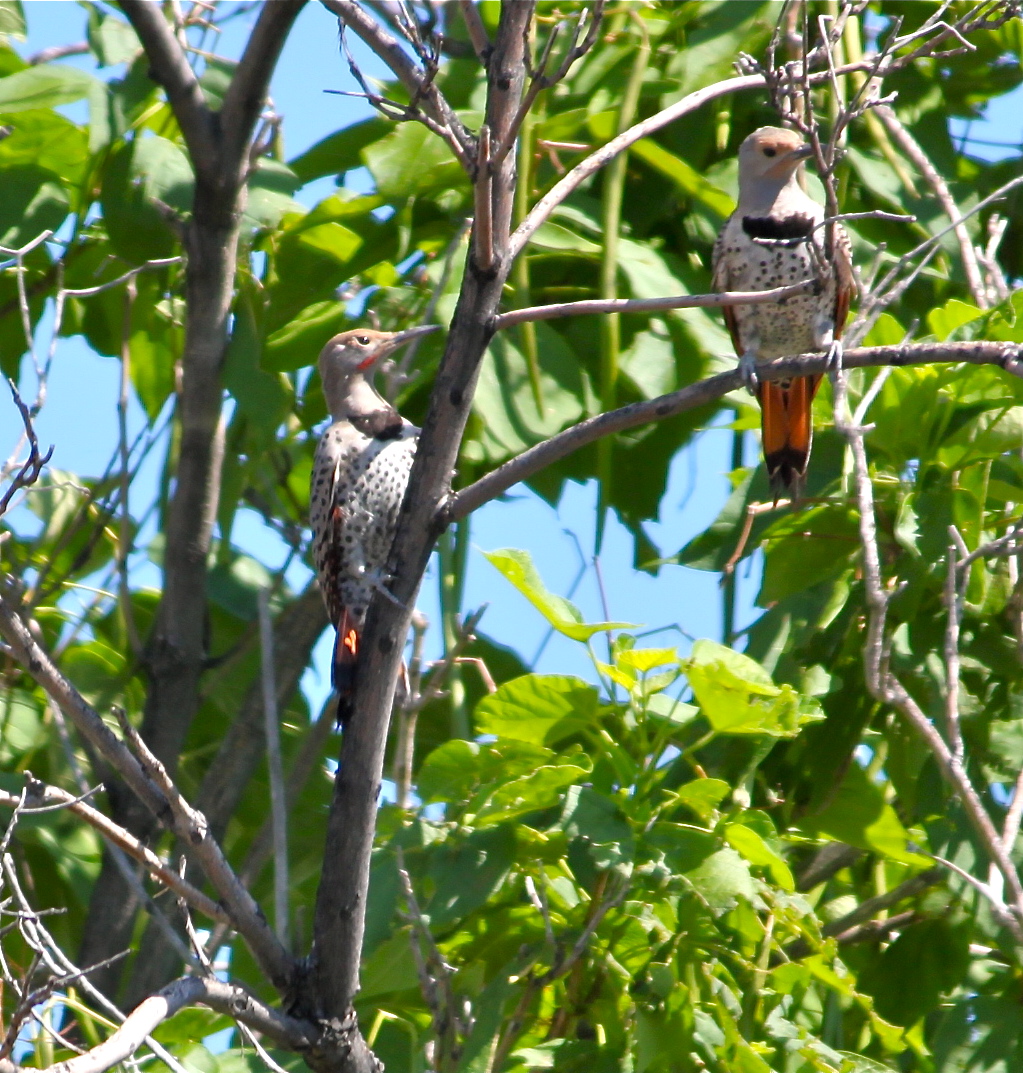
I sat outside much of the summer, taking many photos. Woodpeckers visited and posed amiably.
Bees flew in slow motion for my camera.
Nature's beasts were cooperative with my need to record everything around me.
And I waited. The despair was getting to me, so I decided to do something humorous yet indicative of my state of mind. I produced this self-portrait on Sept. 8, 2012.
The next day, on Sept. 9, I got THE call. We had just gotten in the truck after a blood draw, and were headed out of the parking lot of the hospital for a dentist appointment. My phone rang, and it was TS, the transplant coordinator. She was all cool, and she was like, "Hi, what's up?". And I go "Oh, not much. Just on my way to the dentist, but my schedule is flexible."
I knew there could only be ONE reason for her to be calling me. I was keenly aware that my last blood labs had produced a score that put me at the top of the transplant list. TS suggested I go get a good breakfast, pack a bag, and come back at noon when they would have a bed waiting for me. Organs were being harvested (nice word, don't you think), and if the liver was a good fit, my transplant was to take place in the morning.
So I waited - in my hospital room.
Subscribe to:
Posts (Atom)